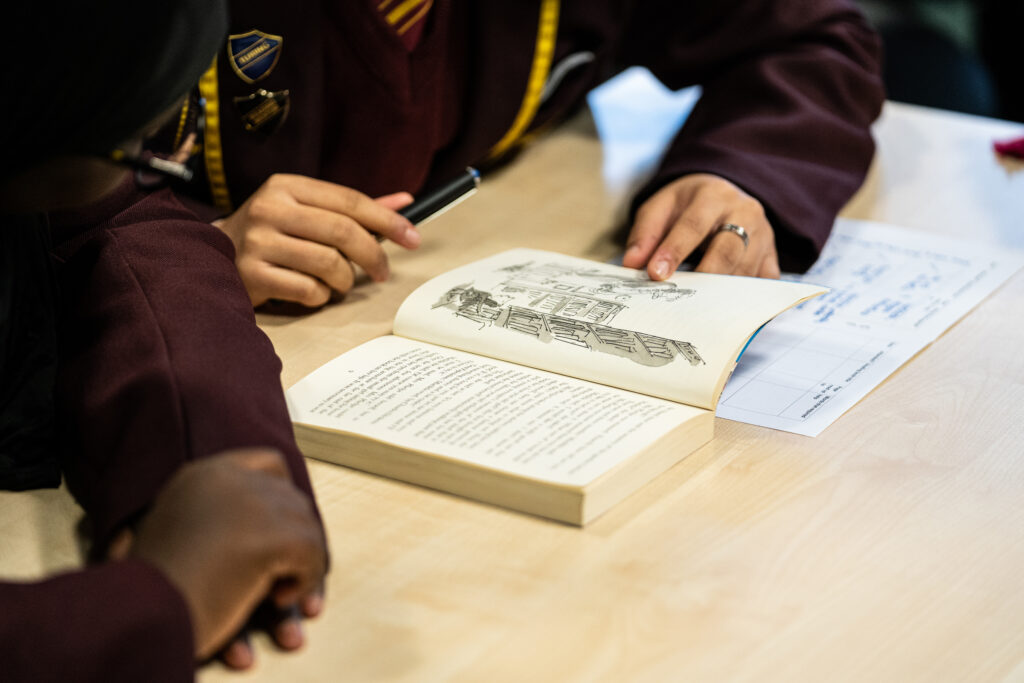
Learning foreign languages is increasingly important in a global economy and also has great value in terms of cultural and linguistic richness in our society, personal fulfilment and global citizenship and understanding.Miss Cheung
Miss S Cheung – Head of Faculty
Miss R Mazire – Head of French
Miss J Robinson – Head of Spanish
Mr T Black – Teacher of French
Learning foreign languages is increasingly important in a global economy and also has great value in terms of cultural and linguistic richness in our society, personal fulfilment and global citizenship and understanding. Through the study of a foreign language pupils understand and appreciate different countries, cultures, peoples and communities – and as they do, begin to think of themselves as citizens of the World as well as citizens of the United Kingdom.
The department aims to provide engaging and challenging experiences with high expectations of achievement that will:
The year group is split into two bands. One band will study French and the other band will study Spanish. All pupils follow the KS3 National Curriculum.
In year 7 teaching focusses on pupils’ competence in listening, speaking, reading and writing, based on a sound foundation of core grammar and vocabulary enabling them to understand and communicate personal and factual information.
In year 8 and 9 pupils continue to study the Language they studied in Year 7, developing further their competence in listening, speaking, reading and writing which will enable them to understand and communicate personal and factual information beyond their immediate needs and interests.
In Year 10 pupils opt to take a modern foreign language, choosing from French or Spanish. Pupils are also encouraged to sit examinations in their first language whenever possible. Over the last few years examination results have also been achieved at the highest levels in Urdu, Portuguese, Arabic, Polish, German, Italian and Chinese.
The three themes are:
The GCSE (9-1) in Modern Foreign Languages consists of four externally examined papers based on the following skills: listening, speaking, reading and writing. Students will complete their speaking assessment in May and all other assessments in May/June at the end of Year 11. GCSE Modern Foreign Languages has a Foundation Tier (grades 1–5) and a Higher Tier (grades 4–9). Students must take all four question papers at the same tier. All question papers must be taken in the same series.
Percentage of total GCSE | Assessment Type | Foundation Tier | Higher Tier | |
|---|---|---|---|---|
Paper 1: Listening and understanding | 25% | Written exam | 35 minutes including 5 minutes’ reading time | 45 minutes including 5 minutes’ reading time |
Paper 2: Speaking | 25% | Internally conducted and externally assessed | 7–9 minutes plus 12 minutes’ preparation time | 10-12 minutes plus 12 minutes’ preparation time |
Paper 3: Reading and understanding | 25% | Written exam | 45 minutes | 1 hour |
Paper 4: Writing | 25% | Written exam | 1 hour | 1 hour 15 minutes |
Find out about the courses we offer at KS4 including examination and enrichment courses.
“Subject leaders have crafted a curriculum which enables pupils to build on their prior knowledge.” OFSTED 2022