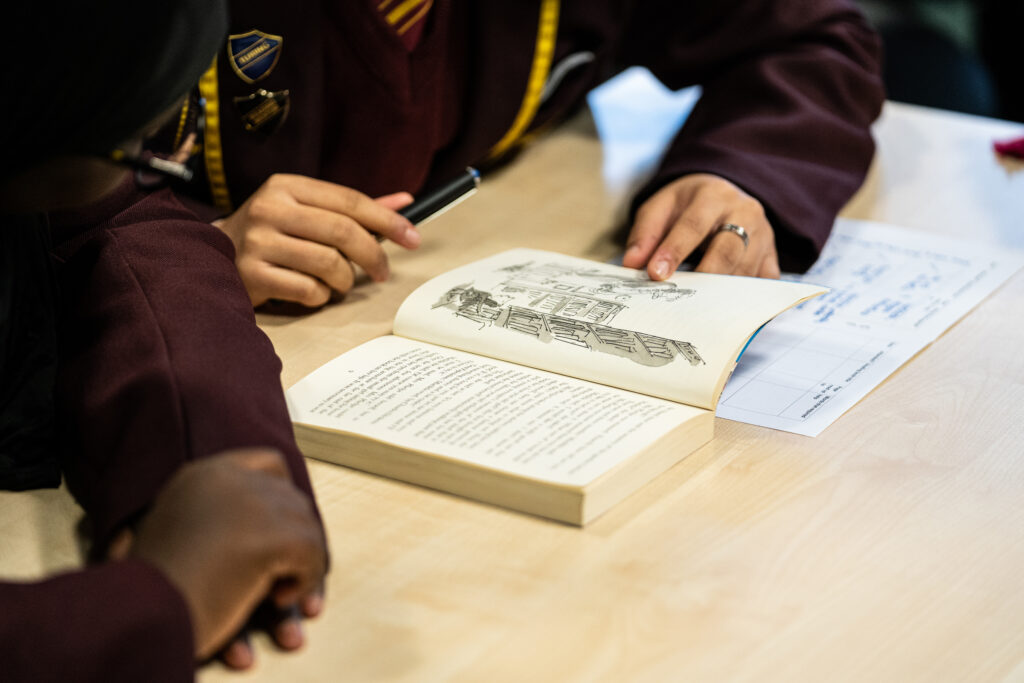
“The range of transferable skills which pupils
will develop, including Verbal Communication/Presentation,
Research, Problem Solving, Analytical Skills, Digital Presentation
Planning and Creative Thinking provide a strong foundation
for success in our fast changing world.
Mr U Yunas
The aim of the Enterprise and Marketing curriculum is to give students the practical skills and applied knowledge they will need in business. Practical elements of the course allow students to build on their theoretical knowledge so they can put their learning into practice, to develop their employability and entrepreneurial spirit.
We will support them to develop independence and confidence in using skills that would be relevant to the business and enterprise sector. This includes a range of transferable skills including verbal communication, presentation, research, problem solving, creative thinking and digital presentation creation.
Students will be able to understand and apply the fundamental principles and concepts of Enterprise and Marketing including characteristics of successful entrepreneurs, market research, financial viability, the marketing mix and factors to consider when starting up and running an enterprise.
Our intention is to bring the subject to life and inspire students to choose courses such as A-level Business or Apprenticeships, or to pursue business initiatives beyond their time at St Peter’s.
The OCR Cambridge Nationals course in Enterprise and Marketing is a 2-year KS4 course with 5 hours of teaching a fortnight.
The qualification meets the Department for Education (DfE) requirements for qualifications in the Technical Award category of the 14-16 performance tables.
Students complete one externally assessed unit (exam) and two centre-assessed units (NEA).
Students are taught theoretical concepts in lessons to cover examined content and then given time to independently apply this to their NEA. Students will design a business proposal, and will then need to develop the skills to effectively pitch their proposal to a panel of potential investors. Practical activities such as pitching help to develop confidence and other transferable skills.
Students are given the opportunity to sit a PPE for the examined unit in June of Year 10. They then sit their GCSE paper in January of Year 11. This allows for a re-sit opportunity in May of Year 11 if required.
The course consists of 3 units:
The first unit, R067 is taught across the two years of the course and introduces pupils to the core structure of the course including; risk and reward for enterprise, market research, financial viability, marketing mix and starting and running an enterprise.
There are two coursework units for the pupils to complete:
R068- Design a business proposal is completed in Yr 10 and runs concurrent to R067. Pupils demonstrate their knowledge and understanding of market research, customers, product development and financial viability.
R069 – Market and pitch a business proposal is completed in Yr 11 and also runs concurrent to R067. Pupils demonstrate their knowledge and understanding of brand identity, promotional campaigns and making a business pitch.
Assessment takes place throughout the course: Each unit is internally assessed and then moderated by the exam board. The written examination is externally assessed by the exam board.
Y11 Component | Method of Assessment | Weighting |
|---|---|---|
R067 – Enterprise and Marketing Concepts | Externally Assessed Exam (1 Hour 15 mins) | 40% |
R069 – Market and pitch a business proposal | Internally Assessed and Externally Moderated | 30% |
Y10 Component | Method of Assessment | Weighting |
R068 – Design a business proposal | Internally Assessed and Externally Moderated | 30% |
Find out about the courses we offer at KS4 including examination and enrichment courses.
“Subject leaders have crafted a curriculum which enables pupils to build on their prior knowledge.” OFSTED 2022