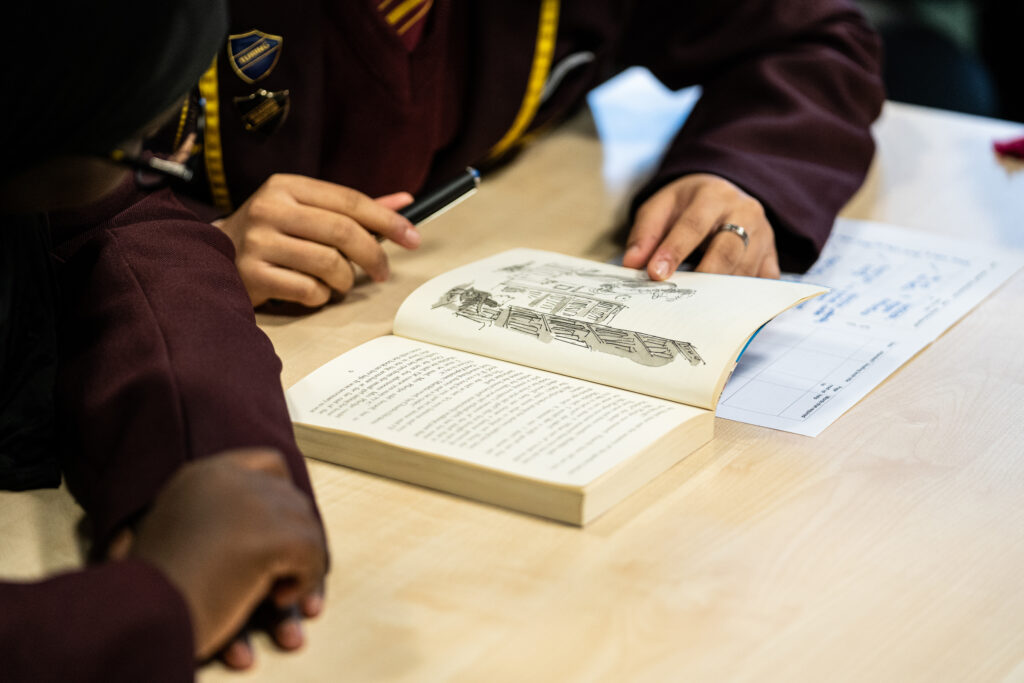
A high-quality science education provides the foundations for understanding the world through the specific disciplines of biology, chemistry and physics.
Head of Faculty
Head of Faculty – Miss Gaynor
Key stage 4 coordinator – Mr Preston
Lead practitioner – Mrs Rehan
STEM coordinator – Mrs Ashraf
Key Stage 3 Co-ordinator – Ms S Max-McCarthy
Mis Gaynor
Mr A Preston
Ms S Rehan
Mr Chaytor
Mr D Sharp
Ms S Ashraf
Mr M Lowrie
Mr D Gibson
Ms S Max-McCarthy
A high-quality science education provides the foundations for understanding the world through the specific disciplines of biology, chemistry and physics. Science has changed our lives and is vital to the world’s future prosperity, and all pupils should be taught essential aspects of the knowledge, methods, processes and uses of science. Through building up a body of key foundational knowledge and concepts, pupils should be encouraged to recognise the power of rational explanation and develop a sense of excitement and curiosity about natural phenomena. They should be encouraged to understand how science can be used to explain what is occurring, predict how things will behave, and analyse causes.
Our curriculum for science aims to ensure that all pupils:
Students can progress from this course to:
In Years 7, 8 and 9 all students follow the KS3 National Curriculum and are taught in mixed attainment classes. Year 7 and 8 students receive 7 lessons of Science per fortnight per fortnight and Year 9 receive 8 lessons per fortnight. Students in KS3 will have a half termly and end of year exams, as well as interim assessments to check for progress and understanding in the foundations of scientific principles. KS3 pupils begin their study of science by learning how to work scientifically. Through the content across all three disciplines, pupils are taught about: scientific attitudes, experimental skills and investigations, analysis and evaluation and measurement.
Biology: Structure and function of living organisms, Material cycles and energy, Interactions and interdependencies and Genetics and evolution
Chemistry: The particulate nature of matter, Atoms, elements and compounds, Pure and impure substances, Energetics, Chemical reactions, The Periodic Table, Materials, and Earth and atmosphere
Physics: Energy, Motion and forces, Waves, Electricity and electromagnetism, Matter and Space
All students follow the KS4 Science National Curriculum. They are set on scientific ability and are taught by a specialist science teacher. At the end of Year 11 all students (apart from those entered for separate science) will be entered for:
Biology: Cell Structure, Enzymes, Transport of Substances, Genetic Information, The Nervous System, Evolution, Health and Disease, Plants and Ecosystems.
Chemistry: Atomic structure, The Periodic Table, Bonding, Acids and Alkalis, Fuels, Rates of Reaction.
Physics: Motions, Forces, Energy, Light and Waves, Radioactivity, Electricity.
Those students that have picked Separate Science as an option will be entered for:
Examination | Length of Exam | Weighting |
|---|---|---|
Paper 1: Biology 1 (F/H) | 1 Hour 10 mins | 16.67% |
Paper 2: Biology 2 (F/H) | 1 Hour 10 mins | 16.67% |
Paper 3: Chemistry 1 (F/H) | 1 Hour 10 mins | 16.67% |
Paper 4: Chemistry 2 (F/H) | 1 Hour 10 mins | 16.67% |
Paper 5: Physics 1 (F/H) | 1 Hour 10 mins | 16.67% |
Paper 6: Physics 2 (F/H) | 1 hour 10 mins | 16.67% |
Examination | Length of Exam | Weighting |
|---|---|---|
GCSE Biology (1-9) | ||
Paper 1: Biology 1 (F/H) | 1 Hour 45 mins | 50% |
Paper 2: Biology 2 (F/H) | 1 Hour 45 mins | 50% |
GCSE Chemistry (1-9) | ||
Paper 3: Chemistry 1 (F/H) | 1 Hour 45 mins | 50% |
Paper 4: Chemistry 2 (F/H) | 1 Hour 45 mins | 50% |
GCSE Physics (1-9) | ||
Paper 5: Physics 1 (F/H) | 1 Hour 45 mins | 50% |
Paper 6: Physics 2 (F/H) | 1 hour 45 mins | 50% |
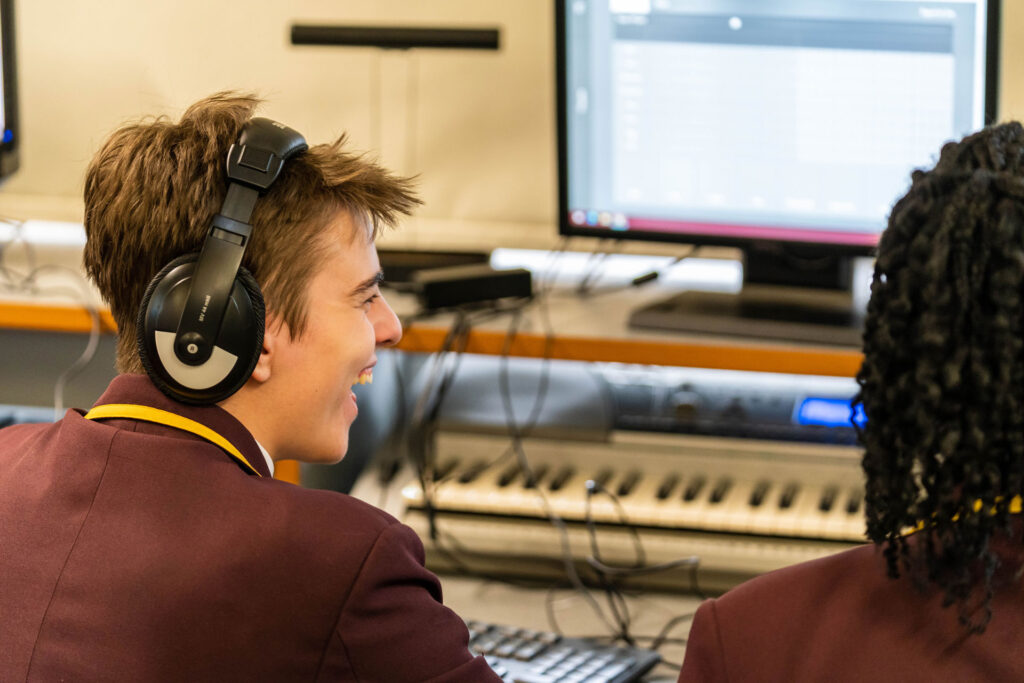
Find out about the courses we offer at KS4 including examination and enrichment courses.
“Subject leaders have crafted a curriculum which enables pupils to build on their prior knowledge.” OFSTED 2022